We sincerely thank Towards Equal Foundation for their generous support towards our Reptile Conservation Project. Your continued encouragement has significantly strengthened our capacity to respond effectively to reptile emergencies and ensure the safe rescue, treatment, rehabilitation, and release of these often-misunderstood species.
Over the past three months, our team has successfully rescued more than 900 reptiles, representing a wide diversity of species commonly affected by urbanisation, habitat fragmentation, and increasing human–wildlife conflict. The rescued species include:
Banded Kukri Snake (2), Barred Wolf Snake (1), Bengal Monitor Lizard (1), Bronzeback Tree Snake (4), Buff striped Keelback (1), Checkered Keelback (19), Common Sand Boa (3), Common Trinket Snake (21), Common Wolf Snake (20), Indian Chameleon (1), Indian Flapshell Turtle (14), Indian Pond Terrapin (14), Indian Python (1), Indian Rat Snake (271), Indian Star Tortoise (14), Oriental Garden Lizard (1), Russell’s Kukri Snake (2), Russell’s Viper (108), Saw scaled Viper (1), Spectacled Cobra (418).
In the past month alone, we have rescued approximately 50 reptiles, clearly highlighting the constant and growing demand for rapid response, specialised handling, and professional rehabilitation facilities.
The support from Towards Equal Foundation has enabled us to undertake several crucial interventions, including:
Safe and humane rescue of both venomous and non-venomous reptiles
Emergency treatment and medical stabilisation
Temporary housing, care, and continuous monitoring
Scientific and ethical release into suitable natural habitats
Active reduction of human–reptile conflict through safe intervention and awareness
Through Project Slither Safe, your partnership has directly contributed to saving hundreds of reptile lives while fostering coexistence, compassion, and ecological responsibility within urban and peri-urban communities.
Case Study Highlights: Key Veterinary Interventions
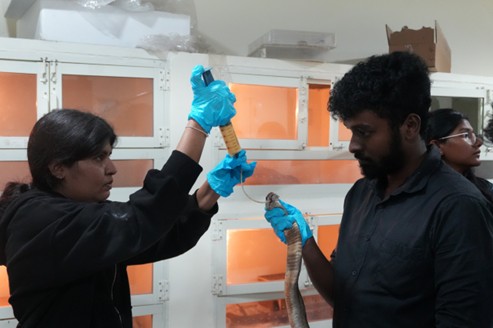
Case Study 1: Poisoning Management in Spectacled Cobra
Species: Spectacled Cobra (Naja naja)
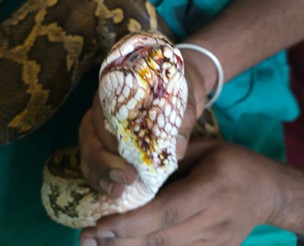
A spectacled cobra was rescued in a critical condition with suspected poisoning. Immediate decontamination was initiated using activated charcoal to limit toxin absorption, followed by intensive fluid therapy and close monitoring. Timely veterinary intervention was crucial in stabilising the animal and supporting recovery.
Case Study 2: Wound Management in Spectacled Cobra
Species: Spectacled Cobra (Naja naja)
An injured spectacled cobra presenting with external wounds was admitted for treatment. Thorough wound cleaning, disinfection, and appropriate dressing were carried out. Continuous monitoring helped prevent secondary infections and ensured proper healing.
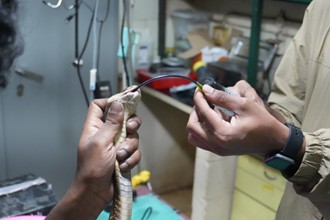
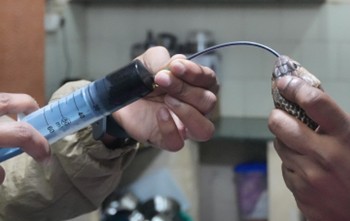
Case Study 3: Nutritional Support through Tube Feeding
Species: Spectacled Cobra (Naja naja)
Due to weakness and inability to feed voluntarily, a rescued spectacled cobra required assisted nutritional support. Tube feeding was initiated to maintain adequate nutrition, prevent further deterioration, and support recovery.
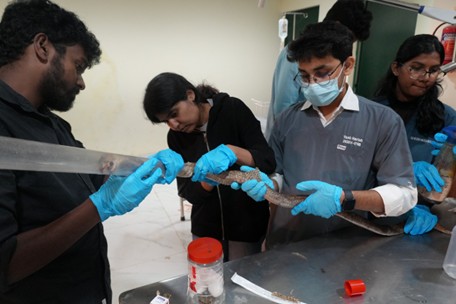
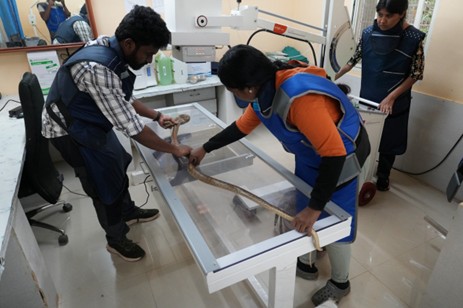
Case Study 4: Diagnostic Imaging for Suspected Spinal Trauma
Species: Spectacled Cobra (Naja naja)
A spectacled cobra suspected of spinal trauma underwent radiographic (X-ray) examination. Diagnostic imaging enabled assessment of internal injuries and guided appropriate treatment planning and supportive care.
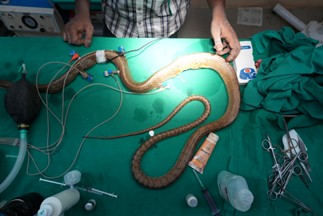
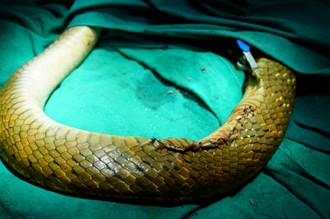
Case Study 5: Surgical Removal of Foreign body
Species: Indian Rat Snake (Ptyas mucosa)
An Indian rat snake was rescued after ingesting a plastic sunscreen bottle, likely mistaken for prey. Emergency surgery was performed to remove the foreign body, preventing gastrointestinal obstruction and life-threatening complications caused by plastic pollution.
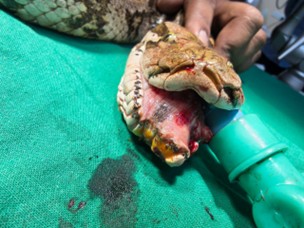
Case Study 6: Tumor Removal in Indian Rock Python
Species: Indian Rock Python (Python molurus)
An Indian rock python was admitted with a tumour in the oral cavity affecting feeding and overall health. Surgical excision of the tumour was successfully carried out, followed by post-operative care and monitoring to support recovery and long-term wellbeing.